This short video goes to show how rhythm an nature go hand in hand! (:
Wednesday, February 8, 2012
"Nature Rocks!" - Stop Motion Final
This short video goes to show how rhythm an nature go hand in hand! (:

Stop Motion Process Photos
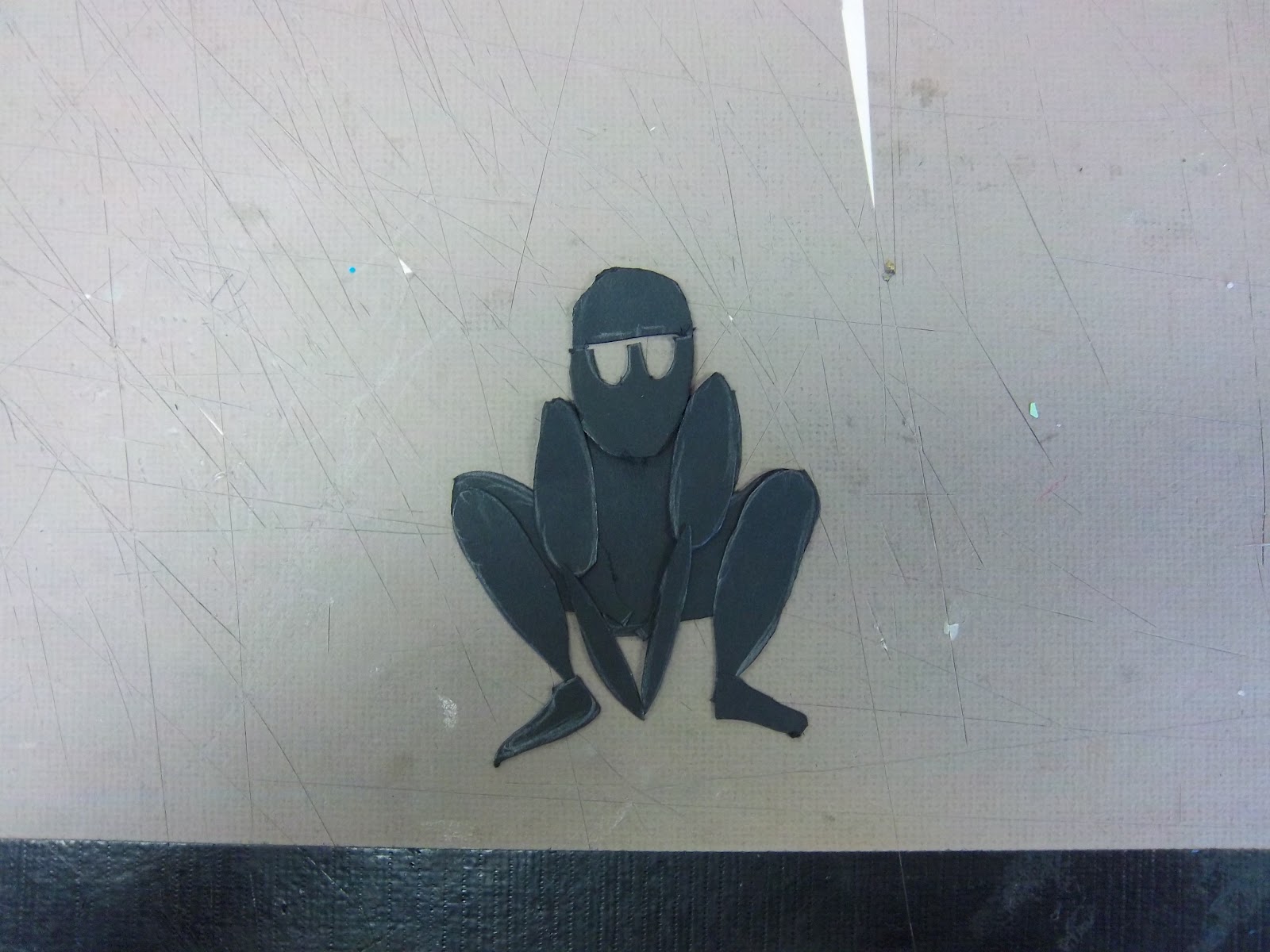


These photos show a reel of a man "dancing." It was a study to see if we could make a man look as if he was in constant upbeat motion.
Tuesday, February 7, 2012
"The Death of the Author" Response
"The true locus of writig is reading." This excerpt tears down the credits of the author saying that all texts are copied, that "the text is a tissue of citations...the writer can only imitate a gesture forever anterio, never original; his only power is to combine the different kinds of writing..." Roland Barthes makes the claim that, "the birth of the reader must be rasomed by the death of the Author." A text is said to consists of multiple writings, issuing from several cultures enetering into dialogue with one another. The only way that al the text can be simplified, collected, and united is not within the author but the reader. "The unity of a text is not in its origin, it is in its destination, " and that destination is the reader who is the only one that holds the apathy to gather all the informaion into a single field of which the text is constituted. I agree with this author to a certain extent. However, the text a reader absorbs is implemented by the author; therefore, the reader is only an extention of the author.
Interactive Narrative, Plot Types, and Interpersonal Relations Response
Interactive narratives begin with the choice of a type of a story for which there are three types: the epic plot, epistemic plot, and the dramatic plot. Interactive narratives deal with the "player" interacting with the story in a manner to control the outcome or determine certain obstacles during the duration of the story. All aspects of the user's actions in an interactive narrative should progress the plot. The objective of an interactive narrative is to make the interactive movements the rule or focus and the passive movements (the long periods of passive watching) the exceptions.
The epic plot focuses on the exploits of a solitary hero and the physical actions of the story. No evolution of personal relations is evident in this type of story. The epic plot has long been a favorite of game designers; and the technology of 3D graphic engines has made it possible to eficiently simulate movement as an embodied experience, creating spatial immersion.
Dramatic narratives focus on evolving the networks of human relations. The action of the plot is mental rather than physical, dealing with acts of verbal communication and emotional narrative immersion. Dramatic narratives present a closed pattern of exposition, complication, and resolution (the Freytag Triangle). The dramatic plot is the most difficult of the three story types to make interactive because it deals with the evolution of interpersonal relations along with he goals of the character at the same time, in which they must be constantly redefined.
In the nineteenth century a third kind of narrative arose. Epistemic narratives, driven by the desire to know, were featured primarily in mystery stories. This type of story runs second to the epic plot in interactive compatibility. It usually casts the player in the role of detective, combining the events being investigated with a variable story created by the actions of the player. Temporal immersion is created through epistemic narratives, which constists of three parts: curiosity and surprise (which dominate the mystery aspect of the story) and finally supense which controls the thriller stories. In an epistemic plot the player remains focused on the mystery until he finds the solution.
The epic plot focuses on the exploits of a solitary hero and the physical actions of the story. No evolution of personal relations is evident in this type of story. The epic plot has long been a favorite of game designers; and the technology of 3D graphic engines has made it possible to eficiently simulate movement as an embodied experience, creating spatial immersion.
Dramatic narratives focus on evolving the networks of human relations. The action of the plot is mental rather than physical, dealing with acts of verbal communication and emotional narrative immersion. Dramatic narratives present a closed pattern of exposition, complication, and resolution (the Freytag Triangle). The dramatic plot is the most difficult of the three story types to make interactive because it deals with the evolution of interpersonal relations along with he goals of the character at the same time, in which they must be constantly redefined.
In the nineteenth century a third kind of narrative arose. Epistemic narratives, driven by the desire to know, were featured primarily in mystery stories. This type of story runs second to the epic plot in interactive compatibility. It usually casts the player in the role of detective, combining the events being investigated with a variable story created by the actions of the player. Temporal immersion is created through epistemic narratives, which constists of three parts: curiosity and surprise (which dominate the mystery aspect of the story) and finally supense which controls the thriller stories. In an epistemic plot the player remains focused on the mystery until he finds the solution.
Friday, January 27, 2012
Tree Growing - Stop Motion Process Photos
The photos here portray a tree growing from just a seed. The story leads from left to right and then down to te next line. We took these photos to get an understanding of how our tree is going to have to be made for our final project.


Storyboard for 1st Stop Motion Project


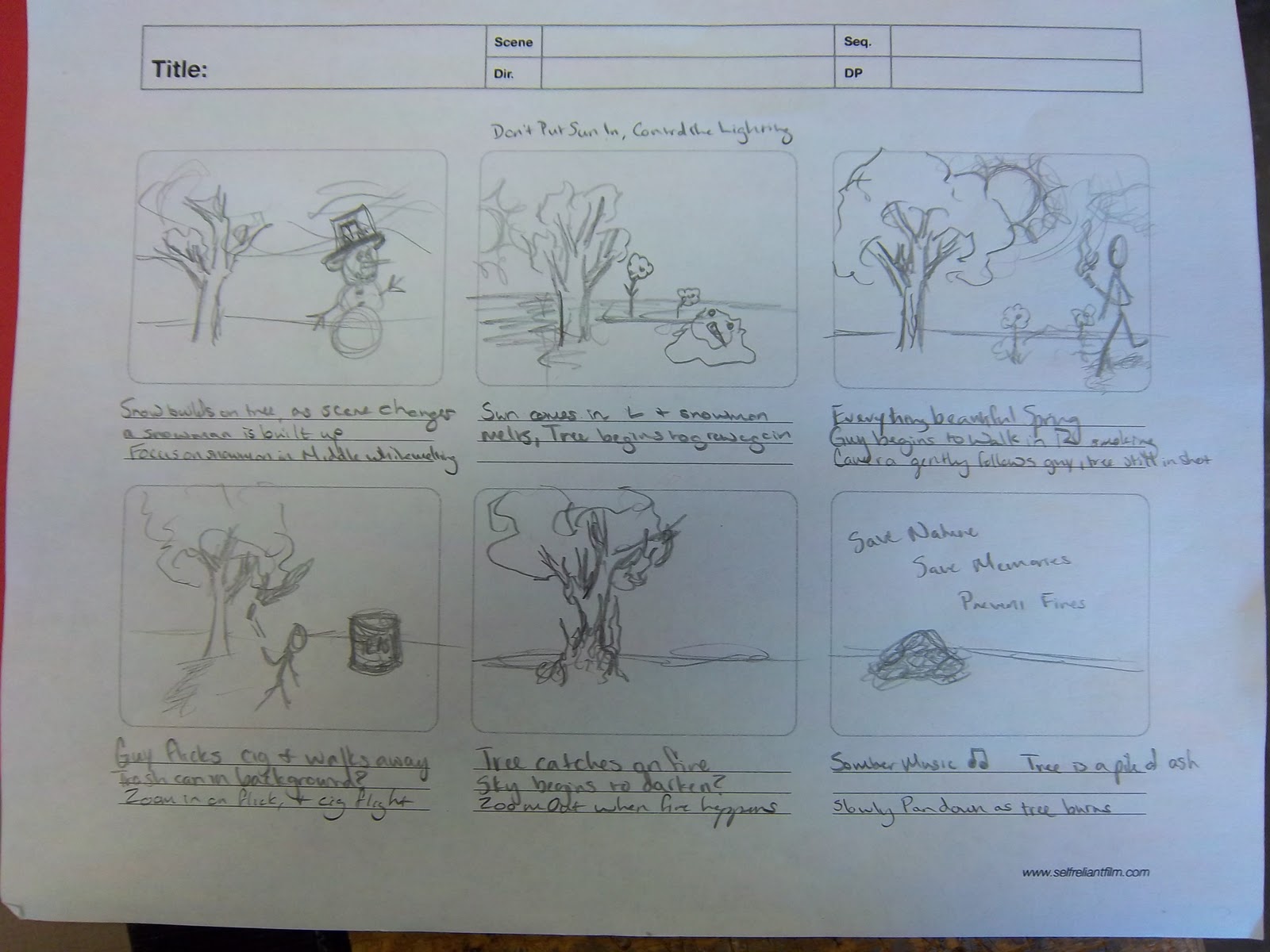
This is the storyboard for the actions we (Alli Burnett, Brooke Taylor, and I) are hoping to accomplish in our project. It portrays the story of a tree growing from just a seed and living throughout the four seasons until its life is cut short by an unfortunate event.
Final Stop Motion Countdown
This is the final stop motion countdown from 3 to 1 using play-dough as our medium to accomplish the desired results. The program used was dragonframe and we got all sound clips from freesounds.org. Finally, we edited the sound clips in audasity and finalized the video in dragonframe.
Subscribe to:
Posts (Atom)